
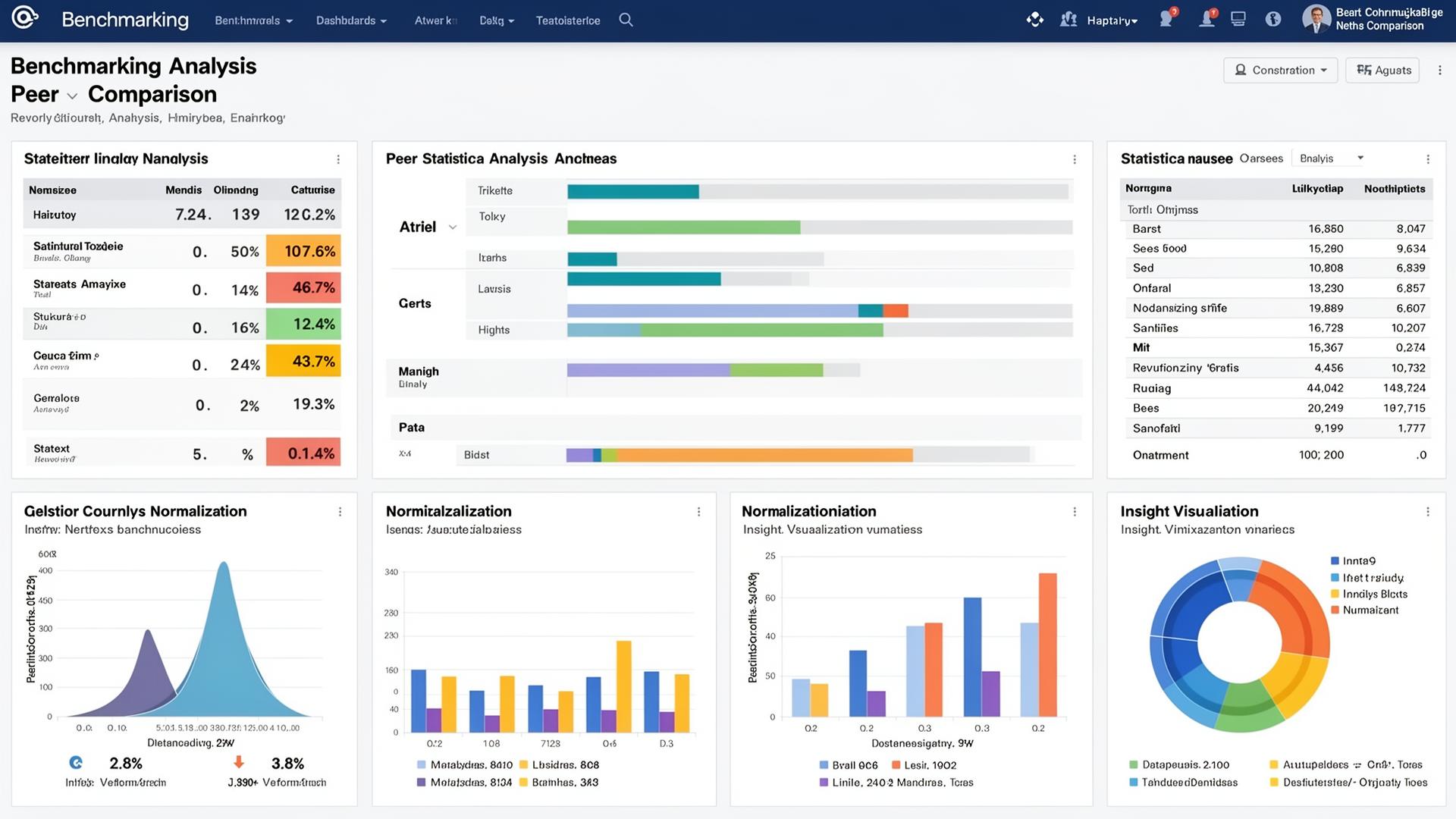
Benchmarking Done Right: Why Traditional Benchmarking Misleads Organizations
Traditional benchmarking ignores context and creates targets that are impossible or meaningless. Learn how to benchmark scientifically using normalization and controllable variables.
1. Traditional Benchmarking Fails Because It Ignores Portfolio Physics
Facilities do not behave identically. Performance depends on asset age, usage intensity, climate, service scope, and regulatory requirements. Benchmarking without normalization is numerically dishonest.
- Asset age and design variation
- Usage intensity differences
- Climate and environmental stress
- Service scope boundaries
- Compliance burden variation
2. Normalize Before Comparing
Scientific benchmarking requires normalization by asset class, floor area, service scope, contract model, and baseline condition.
- Normalize by asset class and criticality
- Adjust for floor area or occupancy
- Account for service scope differences
- Segment by contract model
- Adjust for baseline condition and debt
3. Segment Benchmarks, Do Not Use Single Numbers
A single SLA number for the portfolio is weak. Use segmented benchmarks by asset tier, zone type, vendor performance, and site complexity.
- Tier 1 assets vs Tier 4 assets
- Critical zones vs standard zones
- Vendor performance comparisons
- Site-to-site comparisons with adjustment
4. Benchmark Controllable Variables, Not Vanity Outcomes
Some outcomes are strongly affected by external conditions. Benchmark what you can control: closure quality, recurrence rates, backlog aging, PM effectiveness, and QA compliance.
5. Use Benchmarking to Create Intervention Plans
Benchmarking is valuable when it produces gap diagnosis, root cause hypotheses, intervention priorities, and realistic improvement timelines. It is a decision tool, not a scoreboard.
Conclusion
Traditional benchmarking misleads by ignoring context and normalization. Scientific benchmarking segments portfolios, normalizes drivers, and targets controllable variables. Done right, benchmarking becomes a strategic engine for improvement, not a collection of meaningless comparisons.
More Insights


Want to discuss this topic?
Our team of practitioners can help you apply these frameworks to your operations.
Get in Touch