
Digital SOPs: How Workflow Engines Replace PDFs and Force Compliance
Digitizing SOPs means the SOP is executed by a workflow engine. Learn how to implement SOPs in systems so compliance becomes automatic and measurable.
1. The System Must Encode the SOP Logic
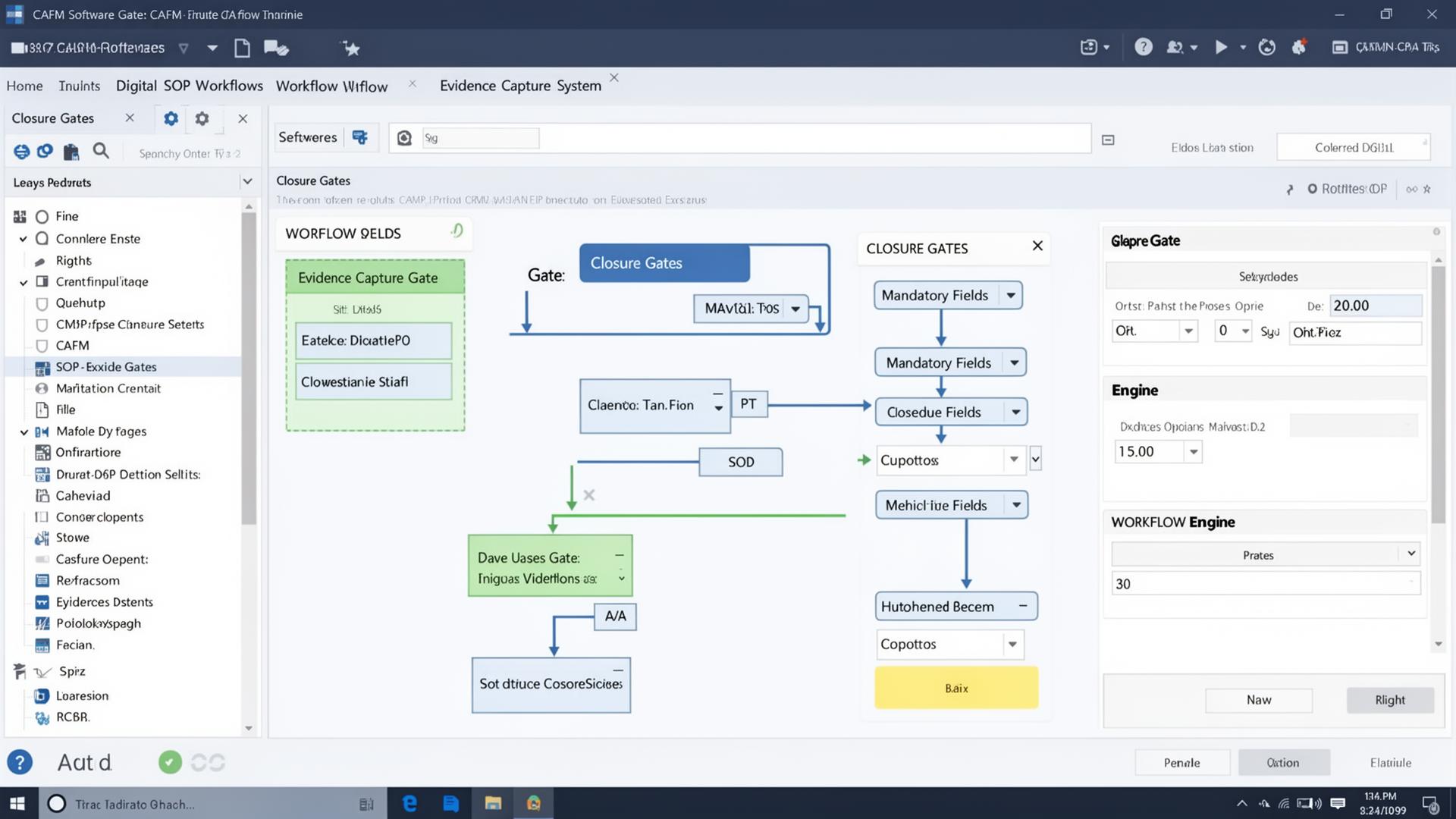
To digitize an SOP properly, translate each step into system behavior including fields, validations, status transitions, approvals, evidence capture, and escalation triggers.
2. Gating Is the Most Powerful Compliance Tool
The system should prevent closure when mandatory evidence is missing, coding fields are incomplete, verification is not captured, or required approvals are absent.
- Prevent closure without mandatory evidence
- Block submission with incomplete coding
- Require verification before status change
- Enforce approval chains
3. Exceptions Must Be Structured, Not Free-Text
Digitized SOPs require exception categories with permitted actions, escalation rules, time thresholds, and trend reporting.
- Defined exception categories
- Permitted actions per exception type
- Escalation and approval flows
- Time thresholds for validity
- Exception trend reporting
4. Digital SOPs Create Real Analytics
Once SOP execution is in-system, you can measure step-level cycle times, bottlenecks, exception frequencies, compliance rates, and impact on reliability.
- Step-level cycle time measurement
- Bottleneck identification
- Exception frequency tracking
- Compliance rate analytics
- Recurrence reduction impact
Conclusion
Digital SOPs are executable processes enforced by workflow engines. The core mechanisms are gating, structured exceptions, evidence capture, and measurable analytics. Once implemented, SOP compliance becomes automatic and auditable, not aspirational.
More Insights


Want to discuss this topic?
Our team of practitioners can help you apply these frameworks to your operations.
Get in Touch