
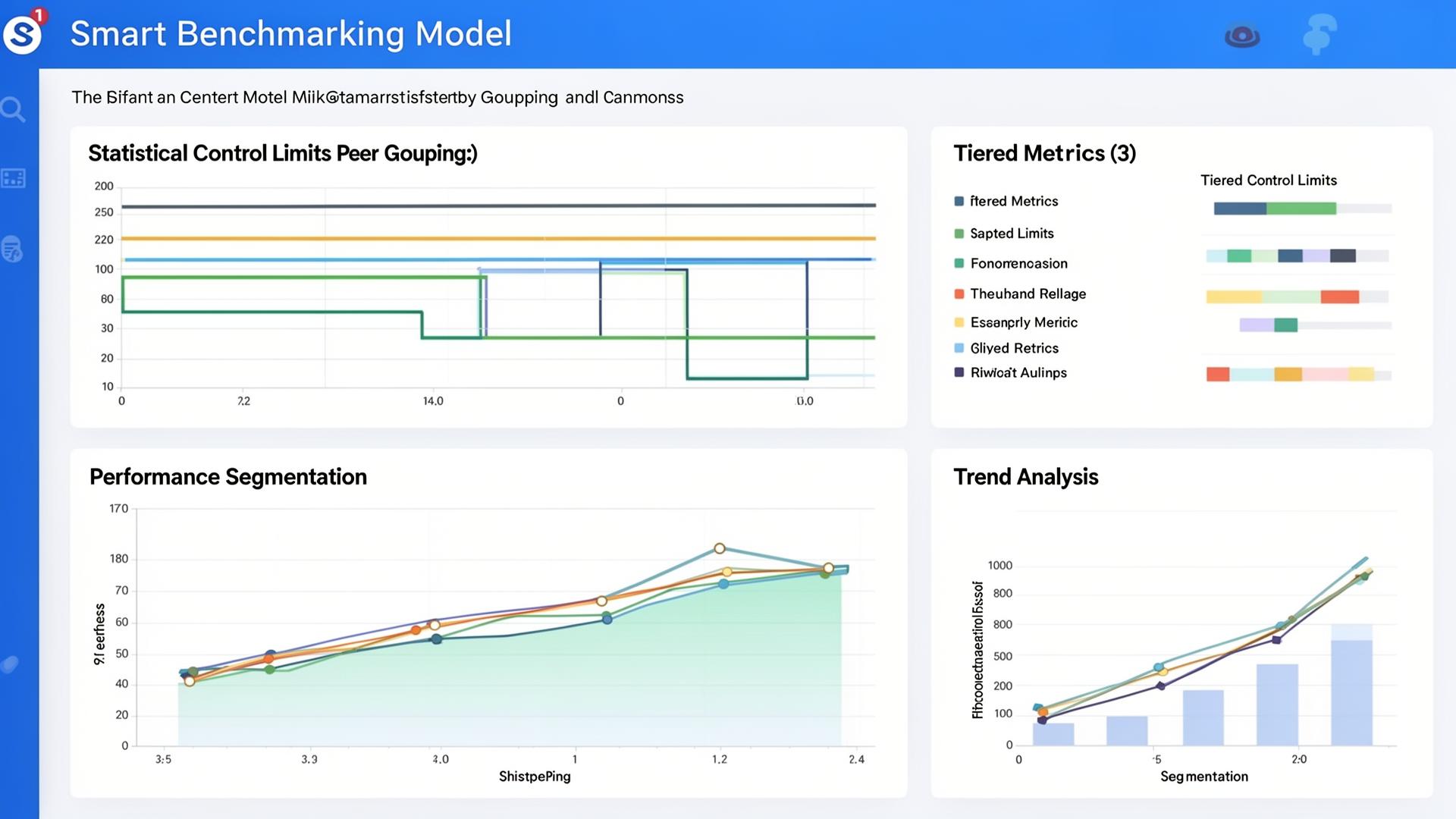
Smart Benchmarking in Practice: How to Build a Benchmark Model That Drives Decisions
Build a practical benchmarking model using normalization, tiering, and statistical control limits. Turn benchmarking into a decision-support tool for operations leaders.
1. Define Peer Groups Before Scoring
You must define peer groups using variables such as asset mix, occupancy intensity, age bands, design type, service scope, and contract model to avoid false comparisons.
2. Use Statistical Control Thinking
Instead of comparing to a single number, use median and quartiles, control limits for normal variance, and trend-based benchmarking over time.
- Median and quartile analysis
- Statistical control limits
- Normal variance identification
- Trend-based benchmarking
- Abnormality detection
3. Build a Benchmark Index, Not a Single KPI
A practical benchmark index combines outcome, execution, and control indicators, tiered by criticality and site.
Index Components
- Outcome indicators: uptime, compliance
- Execution indicators: backlog, SLA quality
- Control indicators: closure evidence, coding quality, QA pass rate
4. Governance Makes Benchmarking Real
Benchmarking must include review cadence, ownership, agreed normalization rules, and intervention tracking to become actionable.
- Regular review cadence
- Clear ownership assignment
- Agreed normalization rules
- Intervention tracking
- Impact measurement
Conclusion
A smart benchmarking model is a normalized, segmented, statistically informed decision system. When engineered correctly, it identifies where performance issues are real, why they exist, and what interventions will change them.
More Insights


Want to discuss this topic?
Our team of practitioners can help you apply these frameworks to your operations.
Get in Touch