
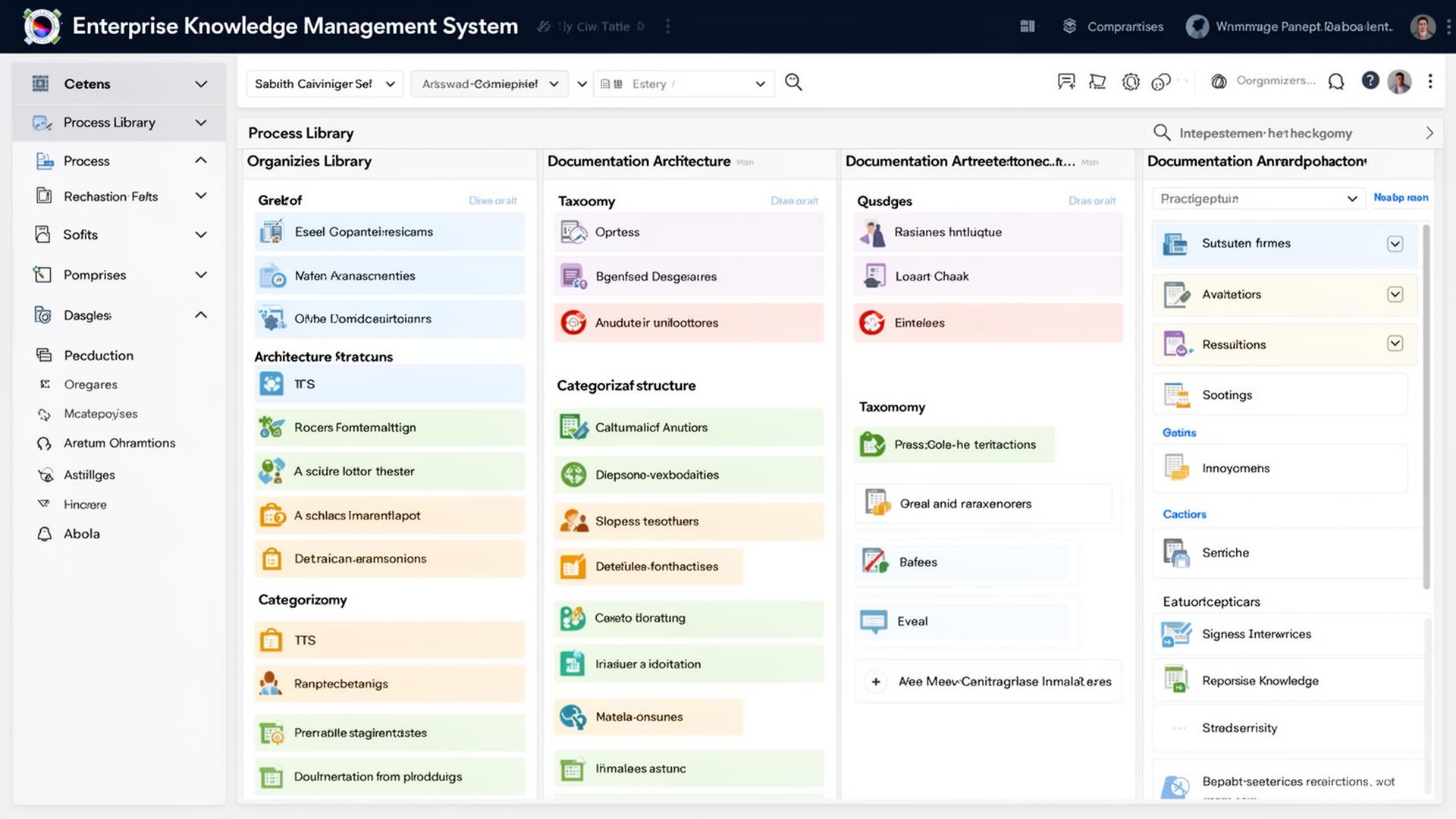
SOP Libraries at Enterprise Scale: Process Architecture That Prevents Chaos
SOP libraries become unmanageable without structure. Learn how to build a scalable process architecture with ownership, version control, evidence mapping, and governance.
1. Build a Process Taxonomy Before Writing More SOPs
An enterprise library must start with a structured taxonomy that prevents duplication and contradiction.
Taxonomy Levels
- Level 0: Domains (Operations, Compliance, Procurement, HSE)
- Level 1: End-to-end processes (Work Orders, PPM, Inspections)
- Level 2: Subprocesses (Triage, Dispatch, Execution, QA)
- Level 3: Work instructions and checklists
2. Assign Ownership at the Process Level
Every process must have clear ownership to prevent decay and ensure continuous improvement.
- Process owner with accountability
- SOP author and maintainer
- Approver authority defined
- Reviewer cadence established
- Change control rules documented
3. Map Evidence Artifacts to SOP Steps
Enterprise-grade SOPs must define evidence artifacts at each step, creating traceability and enabling digitization.
- Logs, forms, photos, certificates
- Checklists and meter readings
- Audit trail entries
- Approvals and sign-offs
4. Version Control and Change Management
A scalable SOP library requires version numbering standards, change logs, effective dates, and controlled distribution to keep staff aligned.
- Clear version numbering standards
- Complete change logs
- Effective dates defined
- Training impact assessment
- Controlled distribution
5. Continuous Improvement Must Be Triggered by Operational Signals
SOPs should evolve based on real operational data, not just theory.
- Exception trends analysis
- Audit findings integration
- Recurrence pattern review
- Incident investigation insights
- KPI performance shifts
Conclusion
Scaling SOPs is an information architecture problem. Build taxonomy, assign ownership, map evidence, enforce non-negotiable controls, and manage versions. That is how SOP libraries remain usable at enterprise scale and reduce operational variance scientifically.
More Insights


Want to discuss this topic?
Our team of practitioners can help you apply these frameworks to your operations.
Get in Touch